OODA Under Pressure: mastering rapid decision‑making for lifesaving action
Origins of the OODA loop
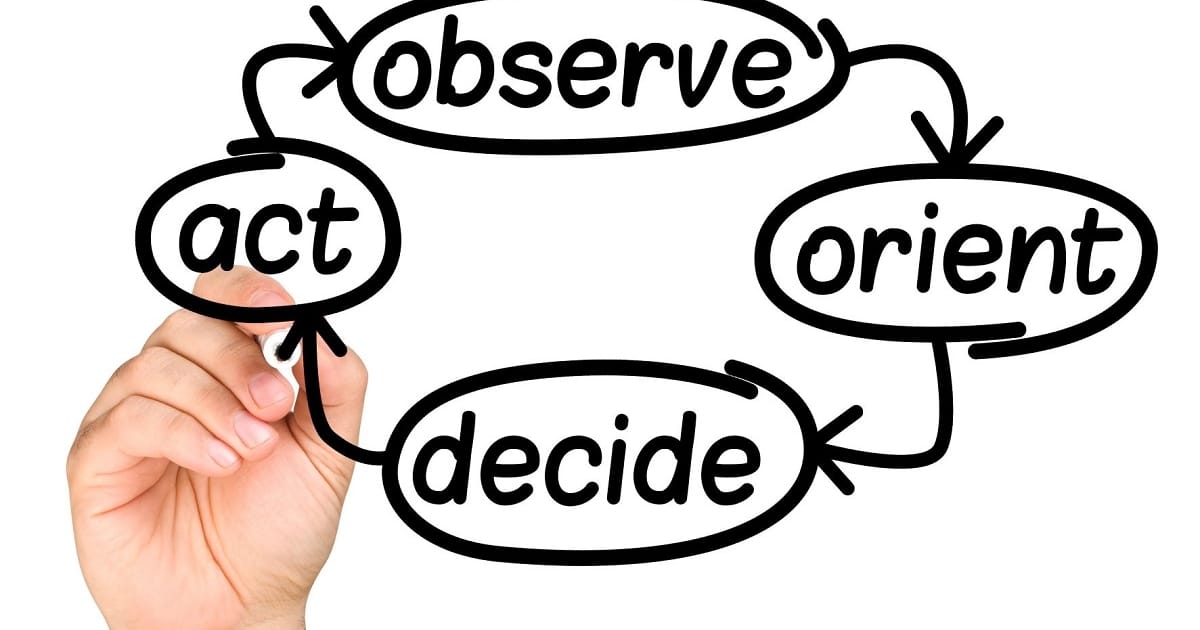
In the mid‑1970s, U.S. Air Force Colonel John Boyd studied why some fighter pilots outmaneuvered their adversaries in dogfights. He proposed that victory often depended not on better aircraft but on faster, more adaptable decision‑making. Boyd’s insight was distilled into the OODA loop, a four‑step cycle of Observe, Orient, Decide and Act. The concept has since permeated military strategy, cyber security, business and healthcare.
Boyd argued that an entity which can process information and react faster than its opponent can “get inside the opponent’s decision cycle” and gain the advantage. The loop is iterative; information flows through multiple feedback paths rather than a single linear sequence. Each iteration builds on prior experience and new observations, making the loop a continuous process of learning and adaptation.
Breaking down the four stages
Observe
The loop starts with gathering information about the environment. In emergencies, rapid observation means quickly identifying threats, injuries and resources. TechTarget’s definition notes that the Observe phase involves recognizing that the world is complex and collecting whatever information is available as quickly as possible. For a bystander at a mass‑casualty scene, this includes noting hazards (active shooter, fire), locating victims and spotting signs of life‑threatening bleeding.
Orient
Boyd considered Orientation the most important part of the loop. It is where we organize observations, integrate them with mental models and filter them through our cultural background, training and experience. Fire Engineering explains that orientation involves searching for cues and patterns in the observed data; it serves as the foundation for subsequent decisions. During this stage, a responder assesses which casualty to treat first, whether to move to cover and what equipment is available. Effective orientation shortens the remaining stages and reduces hesitation.
Decide
Once oriented, we must commit to a plan. Decisions in emergencies weigh multiple options under severe time pressure. Fire Engineering notes that decision makers draw on their knowledge, education, skills and training to predict the best course of action. However, group dynamics such as groupthink can hinder agreement on a single course of action. To avoid analysis paralysis, responders should use checklists or algorithms such as MARCH (Massive hemorrhage, Airway, Respiration, Circulation, Head injury/Hypothermia) to guide choices.
Act
Decisions only matter if acted upon. The Act phase executes the chosen intervention while simultaneously testing its effectiveness. Training helps responders trust their instincts and adjust when actions do not achieve the desired outcome. Fire Engineering emphasizes that after taking action, one should loop back to observation to see whether the situation has improved and, if not, gather more data and re‑orient. The ability to cycle through OODA rapidly improves with practice, allowing individuals to adapt to changing conditions.
Why OODA matters in trauma and hemorrhage control
In high‑threat healthcare settings, delays in decision‑making can cost lives. An editorial in the Journal of High Threat & Austere Medicine notes that Boyd’s OODA loop offers a decision‑making and learning approach to reduce uncertainty for providers working in austere environments. The Australian Tactical Medical Association emphasizes that training and partnerships with special‑operations medics help clinicians “speed up the OODA loop”. For bystanders without medical training, adopting an OODA mindset ensures they do not become paralyzed by shock.
Integration with the MARCH algorithm
The OODA loop complements the MARCH algorithm used in Tactical Combat Casualty Care (TCCC) and Tactical Emergency Casualty Care (TECC). When confronted with a wounded person:
- Observe: identify life‑threatening bleeding, open chest wounds or unconsciousness.
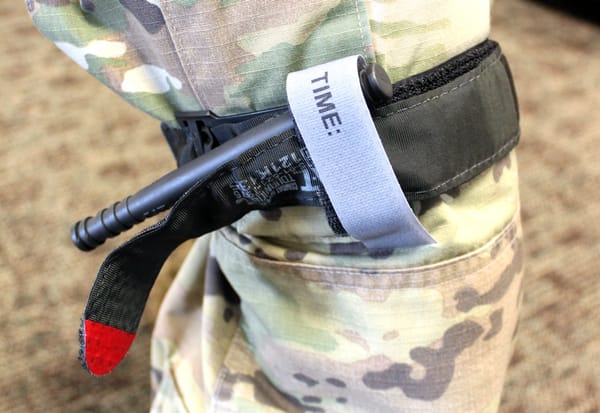
- Orient: prioritise victims and choose interventions based on MARCH. For example, orienting yourself to the presence of a spurting arterial bleed triggers the choice of a tourniquet.
- Decide: select the proper tool (tourniquet, hemostatic gauze, chest seal) and determine whether to move the casualty to cover. Draw on training and heuristics to avoid hesitation.
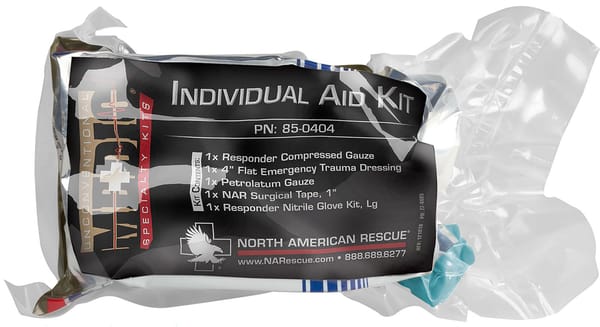
- Act: apply the tourniquet high and tight, pack the wound, or seal the chest wound. Then loop back—observe if bleeding has stopped, orient to any new threats and repeat as necessary.
By cycling through OODA while following MARCH, responders can control hemorrhage quickly and adapt to evolving threats.
Developing OODA skills
Although the loop is simple in theory, executing it under stress requires preparation:
- Scenario‑based training: Fire Engineering notes that practice allows responders to test different decisions and refine their choices before a real emergency. Simulations and drills shorten reaction times and reduce cognitive load.
- Mental models and heuristics: Boyd acknowledged that orientation relies on implicit guidance and prior experience. Creating mental checklists and rehearsing them helps your brain quickly recognize patterns. However, heuristics can lead to mistakes if crucial details are missed. Continuous training updates these mental models.
- Situational awareness: TechTarget explains that orientation requires situational awareness—the comprehension of all environmental stimuli. Paying attention to hazards, escape routes and available resources ensures you can orient effectively.
The OODA loop is more than a military strategy; it is a universal framework for decision‑making under pressure. By cycling through Observe, Orient, Decide and Act, responders can process information faster than events unfold, adapt to new threats and prevent panic. Integrating the OODA loop with trauma care algorithms like MARCH allows both professionals and civilians to make decisive interventions when seconds count. Training, mental rehearsal and situational awareness sharpen each stage of the loop. In the chaos of a mass‑casualty incident, mastering the OODA loop can mean the difference between hesitation and lifesaving action.